
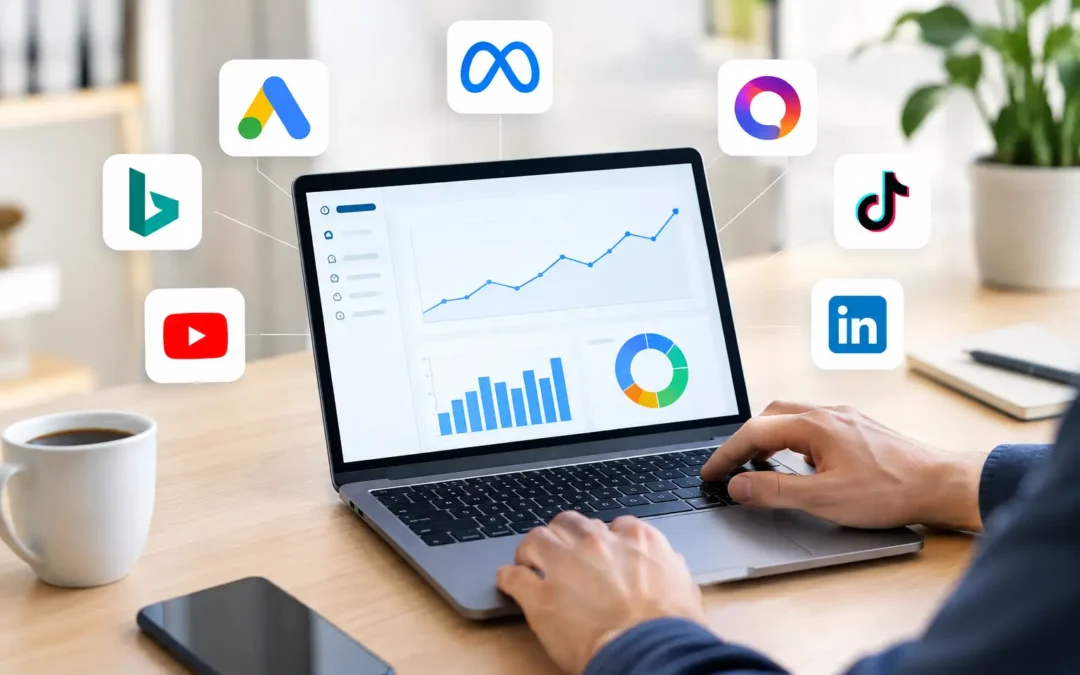
When your cost per click keeps climbing while lead quality stalls, throwing more money into the same campaigns is not a growth strategy. The right Google Ads alternatives can put your business in front of buyers earlier, reach audiences Google search misses, and reduce your dependence on one increasingly competitive auction.
That does not mean Google Ads has stopped working. For many local businesses and professional service firms, it remains one of the strongest channels for capturing high-intent demand. But relying on it alone leaves your pipeline exposed. One pricing change, policy issue, competitor surge, or tracking problem can quickly slow lead flow.
The smarter move is to build a diversified acquisition system. Use paid search where intent is strongest, then add channels that create demand, support retargeting, strengthen local visibility, and turn website traffic into measurable opportunities.
Why businesses need Google Ads alternatives
Google Ads is built around demand that already exists. Someone searches for “emergency plumber,” “business lawyer near me,” or “commercial roofing estimate” because they need help now. That is powerful. It is also why the most valuable keywords attract aggressive competition.
In crowded markets, clicks become expensive before campaigns become profitable. A weak landing page, broad targeting, slow follow-up, or poor call tracking makes that problem worse. Businesses often blame the platform when the real issue is the full conversion path.
Alternatives give you more ways to compete. Some capture overlooked search demand. Others reach decision-makers before they search. Others compound over time by improving organic rankings, local map visibility, and brand recognition. The goal is not to replace a channel that produces profitable leads. The goal is to stop letting one channel control your growth.
8 Google Ads alternatives worth testing
1. Microsoft Advertising
Microsoft Advertising is the closest paid search alternative to Google Ads. It serves ads across Bing, Microsoft Edge, Yahoo partner inventory, and other syndicated placements. The platform usually has lower search volume, but it can also deliver lower competition and less expensive clicks.
This channel often performs well for B2B companies, professional services, home services, and businesses targeting older or higher-income consumers. Many office-based buyers also use Microsoft products throughout their workday, making the audience particularly valuable for certain industries.
Do not assume lower clicks automatically mean better returns. Search volume may be limited in a smaller market, and campaign management still matters. Import proven Google campaigns, then adjust bids, search terms, geographic settings, and conversion tracking based on actual performance.
2. Meta Ads
Facebook and Instagram ads are not search ads. They interrupt the scroll rather than answer an immediate query. That makes them less effective for every urgent service, but extremely useful for creating demand, building awareness, promoting offers, and retargeting site visitors.
A remodeling company can show before-and-after project photos. A law firm can promote a helpful consultation offer. A dental practice can build a campaign around a specific service and use testimonials to establish trust before the prospect ever searches Google.
Meta works best when the creative is strong and the offer is clear. Generic stock imagery and vague slogans burn budget. Use real work, real people, clear outcomes, and landing pages built to convert. For higher-consideration services, pair lead forms with fast qualification and follow-up processes so your sales team is not chasing poor-fit inquiries.
3. LinkedIn Ads
For B2B lead generation, LinkedIn can reach people Google search cannot identify by job title, seniority, company size, industry, and professional interests. If you sell to operations leaders, property managers, HR directors, finance teams, or executives, that targeting can create a major competitive advantage.
The trade-off is cost. LinkedIn clicks and leads are often more expensive than other paid channels. It is rarely the right platform for a low-ticket offer or a broad consumer service. It becomes more attractive when one qualified client has meaningful lifetime value.
The strongest LinkedIn campaigns do not ask cold prospects for a major commitment immediately. They lead with a useful asset, a focused audit, a benchmark, a webinar, or a high-value consultation that speaks directly to a business problem. Then they use retargeting and email follow-up to move leads toward a sales conversation.
4. Local SEO and Google Business Profile optimization
Organic local visibility is not paid advertising, but it is one of the most valuable alternatives to buying every click. When your business appears prominently in map results and local organic search, you can generate calls and quote requests without paying a fee each time someone visits your site.
Local SEO requires more than adding a city name to a page. You need accurate business information, a fully optimized Google Business Profile, service pages built around real search intent, review generation, local authority signals, and a website that performs well on mobile.
This approach takes longer than launching a campaign, but it creates an asset. Paid ads stop when the budget stops. Strong local rankings can keep producing leads month after month. For businesses with a defined service area, local SEO should sit beside paid media, not behind it.
5. Organic SEO for high-value services
If your sales cycle is longer or your service requires research, organic SEO can generate some of the most qualified leads in your marketing mix. Prospects may search for pricing, comparisons, regulations, timelines, and solutions long before they are ready to request a quote.
A well-built content and SEO strategy earns visibility across that entire decision process. It also strengthens the credibility of your brand when prospects later encounter your ads. Ranking for the questions buyers ask tells the market that you understand the problem, not just the pitch.
This is not a quick fix. Competitive rankings demand technical website quality, focused service pages, useful content, authority-building, and ongoing optimization. The upside is substantial: lower long-term acquisition costs and a more defensible position against competitors that rent all of their visibility through ads.
6. Industry directories and marketplace advertising
Directories and marketplaces can work when buyers actively use them to compare local providers. Depending on your industry, that could include legal, home service, healthcare, real estate, or B2B vendor platforms. These channels can deliver leads with clear purchase intent because the user is already looking for a provider.
The risk is lead quality and margin pressure. Some platforms sell the same lead to multiple businesses, while others make it difficult to build a direct relationship with the customer. Review lead terms carefully, track booked revenue rather than just form submissions, and do not let third-party platforms become your only source of demand.
Treat directory advertising as a testable lead source, not an automatic solution. If leads close profitably and your team can respond quickly, scale it. If the platform produces price shoppers and duplicate inquiries, move the budget elsewhere.
7. Email marketing and automation
Most businesses have more value sitting inside their existing contacts than they realize. Old inquiries, past customers, unconverted estimates, newsletter subscribers, and former clients can become a reliable source of repeat business and referrals when communication is consistent and relevant.
Email is especially effective because it improves the return on every other channel. A prospect who clicks an ad but does not convert is not necessarily lost. With the right consent, tracking, and automation, you can continue the conversation with helpful follow-up, proof of results, reminders, and timely offers.
Avoid blasting the same message to everyone. Segment contacts by service interest, location, customer status, and stage in the buying process. A past client may need a maintenance reminder. A new lead may need answers to common objections. Relevance is what turns email from background noise into revenue.
8. Retargeting across multiple channels
Retargeting is not a standalone traffic source, but it is one of the fastest ways to improve the value of your existing traffic. Most visitors will not contact you on their first visit, especially when the service is expensive, complex, or comparison-driven.
Strategic retargeting keeps your business visible after someone visits a key service page, starts a form, watches a video, or engages with an offer. You can use display placements, social ads, and audience-based campaigns to bring qualified visitors back when they are ready to act.
The key is restraint. Do not follow every visitor with the same ad for weeks. Build audiences around meaningful behavior, exclude converted leads, use frequency controls, and refresh creative. Retargeting should reinforce confidence, not make your brand feel intrusive.
How to choose the right mix
The best channel mix depends on your offer, market, sales cycle, and ability to handle leads. Before shifting budget, answer four hard questions:
- Where does your ideal customer spend attention before they are ready to buy?
- What is one new customer actually worth over time?
- Can your website turn paid traffic into calls, forms, and booked appointments?
- Can your team respond quickly enough to convert interest into revenue?
A local emergency service business may prioritize Microsoft Advertising, local SEO, and retargeting. A B2B firm with a high-value contract may put more emphasis on LinkedIn, organic SEO, and email nurturing. A consumer brand with visual proof may gain traction faster through Meta campaigns.
Track every channel against revenue, not vanity metrics. Clicks, impressions, and cheap leads can look impressive while producing zero sales. Use call tracking, form attribution, CRM reporting, and closed-deal data to identify which campaigns create profitable customers.
WYK Web Solutions helps businesses connect paid media, SEO, website performance, and attribution reporting so marketing decisions are based on evidence, not assumptions. When the numbers are clear, you can put more budget behind what works and cut what does not.
The strongest growth strategy is not finding one magic replacement for Google Ads. It is building several reliable paths to visibility, qualified leads, and sales – then making every path accountable to results.