
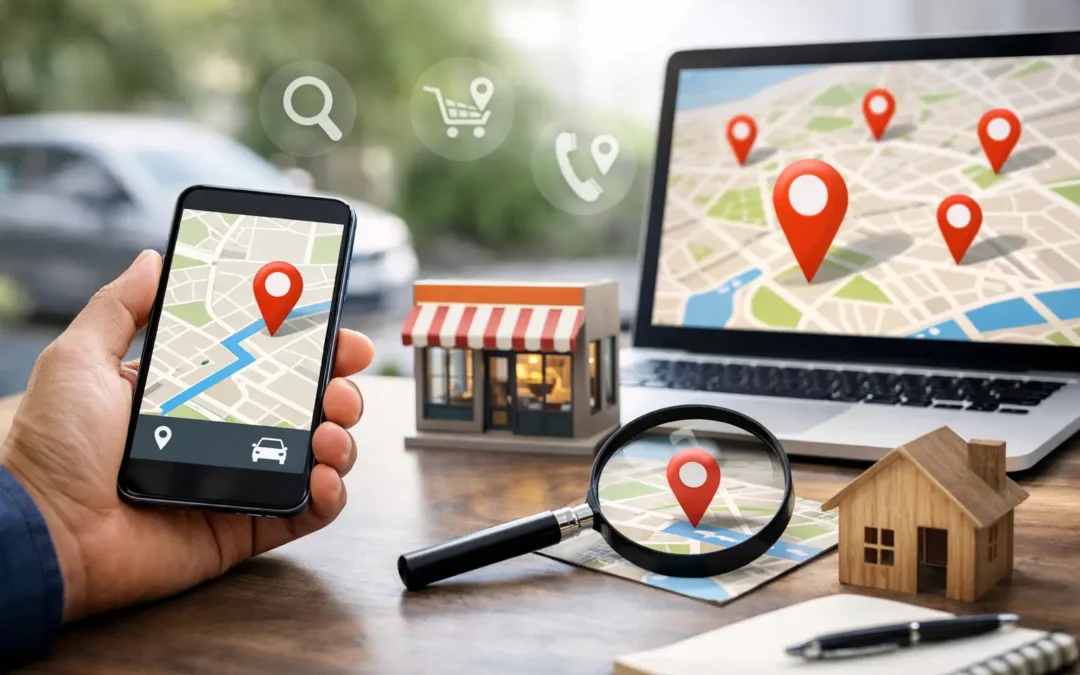
A customer searching for an emergency plumber, family lawyer, dentist, or commercial contractor is rarely researching for entertainment. They have a need, a location, and a short list of businesses competing for the call. That is why local search trends matter: they reveal how Google is deciding which nearby companies earn visibility when purchase intent is at its highest.
For growing businesses, local search is no longer a side project handled by adding a city name to a few web pages. It is a competitive system built on relevance, trust, proximity, website quality, and proof that real customers choose your business. Companies that treat it that way can turn search visibility into a dependable lead-generation channel.
Local Search Trends Are Moving Beyond Rankings
A top organic ranking still has value, but the search results page is no longer a simple list of ten blue links. Local map results, review snippets, service details, photos, paid placements, answer boxes, and AI-generated summaries can all influence the customer before they ever reach a website.
That changes the objective. Businesses should not chase rankings as an isolated metric. The goal is to own as much qualified visibility as possible for the searches that produce calls, form submissions, bookings, and visits.
A business can rank well and still lose leads if its profile has outdated hours, weak reviews, unclear services, or no compelling reason to click. On the other hand, a company that appears consistently across the local pack, organic results, paid ads, and branded searches creates familiarity fast. Familiarity reduces hesitation, particularly when customers need a local provider now.
Search intent is getting more specific
Customers are increasingly using detailed, conversational searches. Instead of typing “roofing company,” they may search “roof repair after hail storm near me,” “flat roof contractor for warehouse,” or “best roofer open Saturday.” Voice search, mobile typing habits, and AI-assisted search experiences all support this shift toward longer, problem-focused queries.
This does not mean every business needs a separate page for every possible sentence a customer might type. That approach produces thin, repetitive content and weakens the site. It means your service pages need to answer real buying questions clearly: what you do, who you help, where you work, what makes your approach different, and how a customer can take the next step.
Your Google Business Profile Is a Conversion Asset
For many local searches, a Google Business Profile is the first interaction a prospect has with a company. It is not just a directory listing. It is a high-intent sales page that needs ongoing attention.
Accurate categories, service areas, hours, phone numbers, appointment links, photos, descriptions, and services all help Google and customers understand the business. Incomplete profiles leave room for competitors to look more established, even when they are not.
Reviews are the other major trust signal. A strong rating helps, but volume, recency, relevance, and response quality matter too. A service business with recent reviews that mention specific work, neighborhoods, and outcomes often sends a stronger credibility signal than a business with a high rating built years ago.
Avoid the temptation to manufacture reviews or pressure every customer with identical wording. That can create risk and does not build genuine trust. Instead, create a consistent review-request process after successful jobs, completed appointments, or positive service milestones. Make it easy, ask at the right time, and respond professionally to every review, including the difficult ones.
Photos and proof influence the decision
Local customers want evidence. Original photos of your team, completed work, office, vehicles, products, and location can make a business feel more credible than a generic profile with stock imagery. For contractors and home service companies, before-and-after project photos are especially persuasive. For professional firms, staff photos, office images, and clear visual branding can reduce the distance between a search and a first consultation.
The standard is simple: show customers what they will actually experience when they choose you.
Website Experience Is Now a Local SEO Advantage
Google can surface a business profile quickly, but prospects still visit websites to validate their decision. If the site loads slowly, buries the phone number, lacks service detail, or feels outdated on mobile, visibility will not convert at the level it should.
A high-performing local website gives each core service a focused page built around customer intent. It explains the problem, outlines the solution, establishes credibility, and makes contacting the business effortless. It also supports local relevance with accurate market information, service areas, case studies, testimonials, and content that demonstrates experience in the communities you serve.
Location pages deserve particular discipline. Businesses with legitimate offices or meaningful service operations in multiple markets can benefit from unique local pages. But copying the same content and swapping city names is not a growth strategy. It creates weak pages for users and limited value for search engines.
Build location pages only where you can offer useful detail. That may include local projects, market-specific services, team availability, regulations, customer stories, or directions. If the content cannot say anything real about the market, it probably does not need to exist.
AI Search Raises the Bar for Local Authority
AI-generated answers are changing how some searches are displayed, especially when customers ask broad comparison questions or seek quick recommendations. These experiences may reduce clicks for simple informational searches, but they also put more pressure on businesses to publish clear, credible, well-structured information.
Search engines need confidence before they can recommend a local business. That confidence comes from consistent business data, real reviews, authoritative service content, strong brand signals, reputable mentions, and a website that demonstrates expertise instead of making vague claims.
For example, a personal injury law firm should not rely on generic statements about being “the best.” It should explain the types of cases it handles, the process clients can expect, the locations it serves, and the qualifications that make the firm credible. A commercial HVAC company should show its capabilities, response times, equipment expertise, project experience, and maintenance options.
AI does not replace local SEO fundamentals. It makes weak fundamentals more visible.
Paid Search and Local SEO Work Better Together
Businesses often treat Google Ads and local SEO as separate budgets with separate goals. That is a missed opportunity. Organic visibility builds durable demand capture over time, while paid search can place your business in front of high-value prospects immediately.
The strongest strategy uses both channels strategically. Paid campaigns can target urgent service searches, competitive categories, and markets where organic rankings are still developing. SEO can strengthen service pages, improve quality signals, and lower long-term dependence on paid acquisition.
The trade-off is budget allocation. Not every business needs to advertise on every keyword, especially when organic visibility is already strong. But relying solely on organic results can leave revenue exposed during seasonal demand spikes, competitive shifts, or algorithm changes. Attribution reporting helps determine where each lead originated and whether the spend is producing profitable opportunities rather than empty traffic.
Measure Leads, Not Vanity Metrics
More impressions are not automatically better. More website visitors are not automatically better either. A local campaign should be judged by the actions that move the business forward: qualified calls, booked consultations, direction requests, estimate forms, online orders, and closed revenue where tracking is available.
Track which services generate inquiries, which locations produce profitable leads, and which searches bring customers who are ready to buy. Call tracking, form tracking, CRM integration, and properly configured analytics make that possible. Without them, businesses can mistake activity for performance.
There is also a human side to measurement. If leads are not being answered quickly, no SEO campaign can fully compensate. Local search produces high-intent prospects, but high intent fades when a call goes to voicemail or a form waits two days for a response. Marketing and operations need to work together.
Build a Local Presence Competitors Cannot Copy
The businesses winning local search are not looking for one shortcut. They are building a stronger market position through better service pages, a credible Google Business Profile, consistent reviews, technical website performance, and reporting tied to real outcomes.
Start with the customer journey your competitors are ignoring. Make it easier for prospects to understand your offer, trust your expertise, and contact your team. That is where local visibility becomes a competitive advantage, and where search traffic starts producing the leads your business is built to win.