
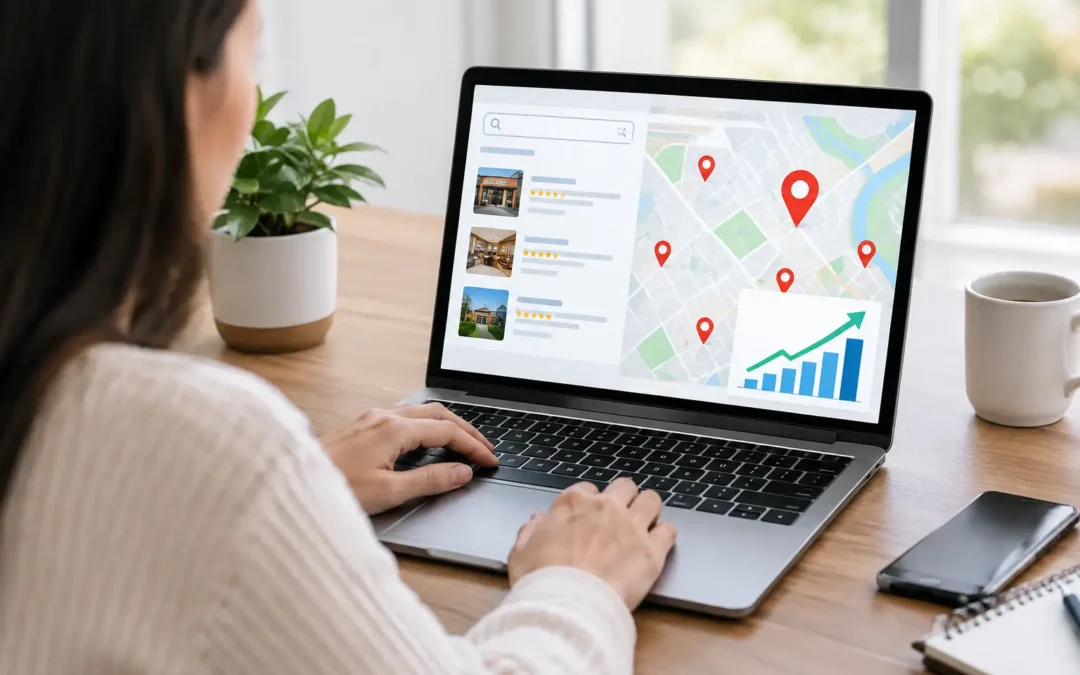
A competitor with fewer years in business can still win the map results, capture the phone call, and book the job. That is the reality behind current local search ranking trends. Google is rewarding businesses that make it easy to verify relevance, proximity, trust, and real-world customer satisfaction. A polished website alone is no longer enough. Your local visibility must prove that your business is the best answer for a nearby customer with immediate intent.
For local companies, professional firms, and service providers, this shift creates both pressure and opportunity. The businesses that treat local SEO as a revenue channel rather than a one-time setup are gaining market share while slower competitors disappear below the fold.
Local Search Ranking Trends Are Moving Beyond Listings
Your Google Business Profile remains a major local visibility asset, but claiming it is only the starting point. Google increasingly evaluates whether the information surrounding that profile is accurate, active, and supported across the web. A profile with the correct category, services, hours, photos, and reviews gives search engines confidence. A neglected profile sends the opposite signal.
This is why local results are less predictable for businesses that rely on a single tactic. Rankings now reflect a connected ecosystem: your website, business profile, reviews, local citations, brand mentions, user behavior, and the quality of the information a customer finds after clicking.
The trade-off is clear. High-volume activity without strategy can create noise, while a few well-managed local assets can create measurable momentum. A law firm, HVAC contractor, dental office, or home services company does not need to publish content for the sake of publishing. It needs content and profile signals that match the services, locations, and questions its best prospects are actively searching.
Google Business Profiles Need Ongoing Management
A Google Business Profile is no longer a directory entry to set and forget. It is often the first sales page a customer sees. Searchers can review services, photos, ratings, updates, questions, directions, and contact options before they ever reach your website.
Accuracy matters because mismatched details create friction for both customers and search engines. If your listed hours differ from your website, if your service areas are vague, or if your primary category does not reflect your most profitable service, you may be giving competitors an opening.
Businesses should also pay closer attention to conversion signals within the profile. Are calls increasing? Are people requesting directions? Are they clicking through to key service pages? Ranking in the local pack matters, but rankings without calls, form submissions, and booked appointments do not produce growth.
Fresh photos, timely updates, complete service details, and thoughtful responses to reviews all reinforce that your business is active and accountable. These actions will not replace strong website SEO, but they strengthen the local presence that puts your business in front of ready-to-buy customers.
Reviews Are Becoming a Competitive Visibility Signal
Reviews influence far more than reputation. They shape click-through rates, customer confidence, and local prominence. When two businesses appear next to each other in the map pack, the company with a stronger rating, more recent feedback, and credible responses has a clear commercial advantage.
The strongest review programs are consistent, not desperate. Asking every satisfied customer at the right point in the experience produces better long-term results than running a short campaign and stopping. Timing is especially important for service businesses. Request feedback after the job is complete, the result is visible, and the customer has had a positive interaction with your team.
Do not script reviews or pressure customers to mention keywords. Google has become more aggressive about suspicious review patterns, and customers can spot manufactured language immediately. Instead, make the process easy and encourage honest feedback about the service, location, outcome, and overall experience.
Responding matters as well. A professional reply to a positive review builds trust. A calm, practical response to criticism can protect your reputation and show future customers that your business takes accountability seriously.
Local Landing Pages Must Earn Their Place
Creating one thin page for every neighborhood is not a local SEO strategy. It is a fast route to weak content and limited results. Search engines want pages that offer distinct value, not swapped city names placed into the same template.
The local pages that perform best explain what you do in a specific market, show relevant proof, answer local buying questions, and direct visitors toward the next step. A plumbing company might address common regional water issues. A commercial contractor may feature project types common to a local business district. A family law firm could clarify service availability by county or nearby city.
Location pages should support real business operations. If you do not serve an area, do not build a page simply because the search volume looks attractive. That approach may create short-term impressions, but it produces poor engagement and unqualified leads. Focus on the markets where you can compete, respond quickly, and deliver a strong customer experience.
Service relevance still beats broad traffic
A page that ranks for a broad local term may look impressive in a report, but it is not automatically valuable. The better question is whether it attracts the type of searcher who is likely to call, request an estimate, or schedule a consultation.
Build content around high-intent combinations of service, location, and need. Think less about vanity traffic and more about searches that connect directly to revenue. That is where local SEO becomes a competitive growth engine rather than an awareness exercise.
AI Search Raises the Bar for Trustworthy Local Information
AI-generated search experiences are changing how people discover businesses, especially when they ask detailed questions instead of typing short keyword phrases. Search engines need reliable sources to summarize local options, services, pricing factors, qualifications, and customer experiences.
That means your website must be clear enough for both people and search systems to understand. Explain your services in plain language. Make your business details consistent. Use real expertise instead of generic filler. Publish content that answers questions your sales team hears every week.
There is a limit, though. AI tools can speed up research and content production, but automated pages packed with repetitive local phrasing will not build trust. They can also create factual errors that damage credibility. Use AI to improve workflow, not to replace subject matter knowledge, quality control, or a genuine understanding of your market.
Engagement and Conversion Quality Matter More
Google does not reveal every ranking signal, but local businesses should assume that user satisfaction is part of the bigger picture. If a customer clicks your result and finds a slow, confusing, or irrelevant website, that visit is unlikely to become a lead. Over time, poor experiences undermine the value of your hard-earned visibility.
Your website should make local intent obvious. Show the services you offer, where you serve customers, what makes your team credible, and how a prospect can contact you. Calls to action should be direct. Do not make someone hunt for a phone number, service area, or quote request form when they are ready to act.
Mobile performance is especially critical. Many local searches happen between meetings, during emergencies, or while a customer is comparing providers from a parking lot. Fast pages, tap-to-call functionality, readable service information, and simple forms can separate a lead-generating website from a digital brochure.
Measure Local Visibility Against Business Outcomes
Ranking reports have value, but they do not tell the whole story. Local results vary by device, neighborhood, search history, and proximity. A number-one position seen from one ZIP code may not appear the same way from another.
Track rankings across your priority service areas, but connect that data to calls, form submissions, booked appointments, direction requests, and lead quality. If rankings rise while qualified leads remain flat, investigate the targeting, landing page experience, and search terms bringing people in.
The winning strategy is not to chase every local keyword. It is to own the searches that matter most, build credibility across every customer touchpoint, and keep improving based on what the data says. Businesses that move with these local search ranking trends will not just show up more often. They will be positioned to take more business from competitors when it counts.