
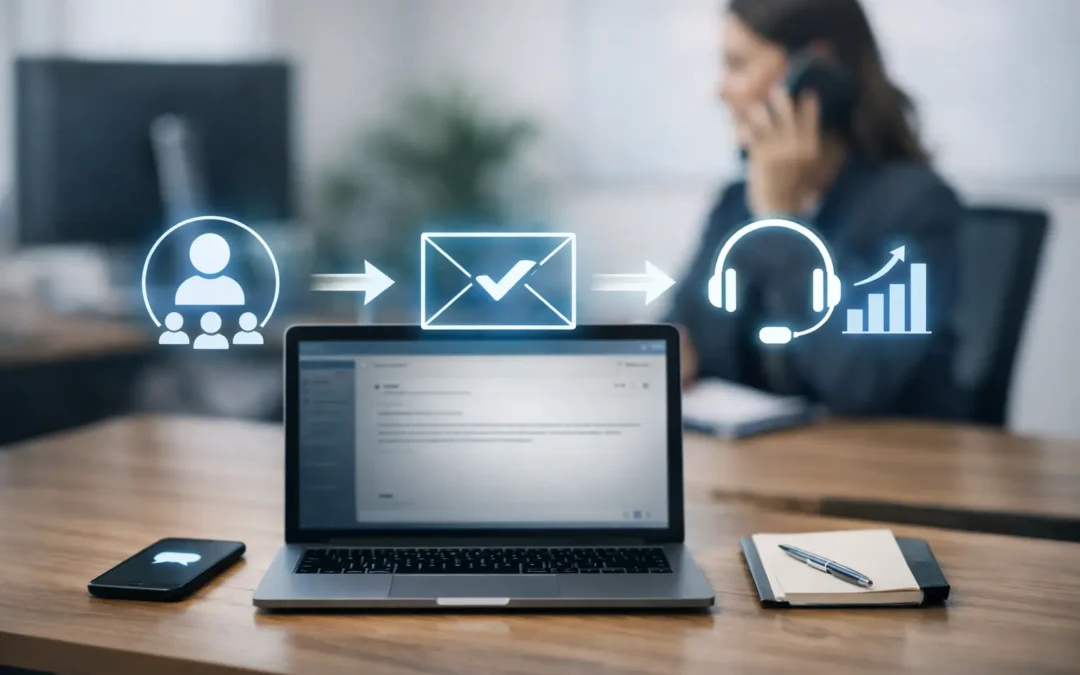
A lead comes in at 9:14 AM. Your team is busy. The callback gets pushed to the afternoon, then tomorrow, then maybe next week. By then, that prospect has already spoken to a competitor who replied in minutes. That is exactly why more growth-focused companies automate lead follow up. Speed matters, consistency matters, and manual systems break fast when lead volume starts climbing.
For small and mid-sized businesses, follow-up is where revenue is often won or lost. You can invest in SEO, paid ads, social media, and a high-performing website, but if leads sit untouched, your marketing is leaking money. Automation fixes that leak – when it is built with strategy instead of guesswork.
Why automate lead follow up now
Most businesses do not have a lead problem. They have a response problem. Forms get submitted after hours. Calls are missed. Sales reps forget to send the second email. Marketing promises fast service, but the actual follow-up process depends on whoever happens to be available.
That gap creates friction right when buyer intent is strongest. A good automation system closes it by responding immediately, routing leads correctly, and keeping communication moving until a real conversation happens.
There is also a scaling advantage. Manual follow-up can work when you get a handful of leads each week. It falls apart when campaigns start performing, seasonality spikes demand, or multiple channels begin feeding your pipeline at once. If your business wants more visibility and more lead volume, your follow-up system has to keep up.
What lead follow-up automation should actually do
Too many businesses hear “automation” and think of generic email blasts that feel cold and obvious. That is not the goal. The goal is to create a faster, tighter process that helps qualified prospects move forward without delays.
A strong system usually starts with an instant first response. That might be an email, text, or both, depending on the lead source and your audience. From there, automation should assign the lead to the right person, trigger reminders for your team, and send a short sequence of follow-up messages if the lead does not book or reply.
It should also segment. A high-intent form submission requesting a quote should not get the same response as someone downloading a basic guide. One person is close to a decision. The other may need more education. Treating both leads the same weakens conversion rates.
This is where many businesses miss the mark. They automate activity instead of outcomes. More messages do not automatically mean more sales. Better timing, better qualification, and better messaging are what move the numbers.
How to automate lead follow up without making it feel robotic
The best automation does not sound automated. It sounds timely, relevant, and useful.
That starts with your message. If your first auto-response reads like a canned corporate template, it will get ignored. A better approach is simple and direct: confirm receipt, set expectations, and give the lead one clear next step. If someone requested service, tell them when they will hear from your team. If booking is the fastest path, offer that immediately.
Personalization also matters, but not in a gimmicky way. Using a first name is fine. Referencing the service they asked about is better. Referencing the location or issue they mentioned is better still. Small details make the interaction feel intentional.
Timing needs nuance too. Immediate response is usually a win, especially for service inquiries. But not every follow-up sequence should fire off daily for two weeks. That can feel aggressive fast. The right cadence depends on your sales cycle, offer type, and urgency. A home services lead may need rapid follow-up over 48 hours. A B2B prospect with a larger buying process may need a more measured sequence over a few weeks.
The core pieces of an effective automation workflow
To automate lead follow up properly, you need more than software. You need a clear funnel.
First, define where leads come from. Website forms, landing pages, paid ads, organic search, social campaigns, live chat, and phone calls can all feed different types of prospects into your system. If you lump them together without context, your follow-up will be weaker from the start.
Next, map the handoff. Who owns the lead first? Sales? Front desk? A location manager? If the answer is unclear, automation will simply move confusion faster. The process has to be assigned before it is automated.
Then build the sequence itself. In most cases, that includes an immediate confirmation, an internal alert, a second touchpoint if there is no reply, and a reminder task for a human follow-up. For some businesses, text messaging outperforms email. For others, especially in professional services, email may be the better first move. It depends on buyer expectations and the nature of the service.
Finally, track outcomes. Did the lead reply? Book? No-show? Go cold? Become a customer? If you cannot tie automation to actual conversion stages, you are operating on assumptions.
Where businesses get it wrong
The biggest mistake is automating a broken process. If your offers are unclear, your contact forms ask the wrong questions, or your sales team is slow to respond even after notifications, automation will not fix the underlying issue.
Another common problem is over-automation. Prospects can tell when every message is scripted, every reply is delayed until the next trigger, and no real person steps in when the conversation gets serious. Automation should support human sales effort, not replace it.
There is also a data problem. Many companies run campaigns across SEO, PPC, and social media but do not track which source drives the highest-quality leads. That means every lead gets the same treatment, even though intent can vary wildly by channel. Someone who searched for your service on Google is often much closer to buying than someone who clicked a broad awareness ad. Your follow-up should reflect that.
The tools matter less than the strategy
Businesses often ask which platform is best for automation. That is the wrong first question.
The better question is this: what should happen from the second a lead comes in to the second a deal is closed or lost? Once that is clear, the right tools become easier to choose. CRM platforms, call tracking systems, form integrations, text automation, email workflows, and calendar booking tools can all play a role. But if the underlying process is messy, the software stack just makes the mess harder to diagnose.
A smart setup connects your website, campaigns, CRM, and reporting so you can see the full path from click to customer. That is where real performance gains show up. When lead follow-up is tied to attribution, you stop guessing which campaigns are working and start investing with confidence.
For companies competing in crowded local markets, this matters even more. If your competitors respond faster, stay in front of prospects longer, and track their pipeline more accurately, they will win deals that should have been yours.
Automate lead follow up with the right human checkpoints
Automation should accelerate the sales process, not remove accountability from it.
The best systems use automation to handle speed and consistency, then bring in real people at key moments. That might mean a sales rep calls within five minutes of a high-intent inquiry. It might mean a team member personally follows up after a quote request is opened but not answered. It might mean your front office gets alerted when a hot lead books outside normal hours.
These human checkpoints matter because not every lead behaves the same way. Some are ready now. Some are comparing options. Some need reassurance before they trust your business. Automation helps you cover the basics every time. Human follow-up closes the gap between interest and action.
That balance is where many service businesses find their edge. Not by sending more messages, but by responding faster, staying organized, and knowing exactly when a human should step in.
What better follow-up looks like in practice
A strong lead follow-up system feels simple from the outside. A prospect fills out a form and gets an immediate response. The right team member is notified. If the lead does not respond, a timed sequence keeps the conversation warm. If the lead engages, the workflow shifts toward booking, quoting, or consultation. If the lead goes cold, the system can re-engage later without relying on memory or spreadsheets.
Behind that simplicity is a serious competitive advantage. Faster response times. Fewer dropped leads. Better visibility into what is converting. More value from every SEO campaign, ad click, and website visit.
That is why businesses that want real growth do not treat follow-up as an afterthought. They build it into the engine. At WYK Web Solutions, that mindset drives how performance marketing, web strategy, and automation should work together – not as disconnected tactics, but as one system built to generate and convert demand.
If your business is serious about growth, do not just chase more leads. Build a follow-up process that makes every lead count.