
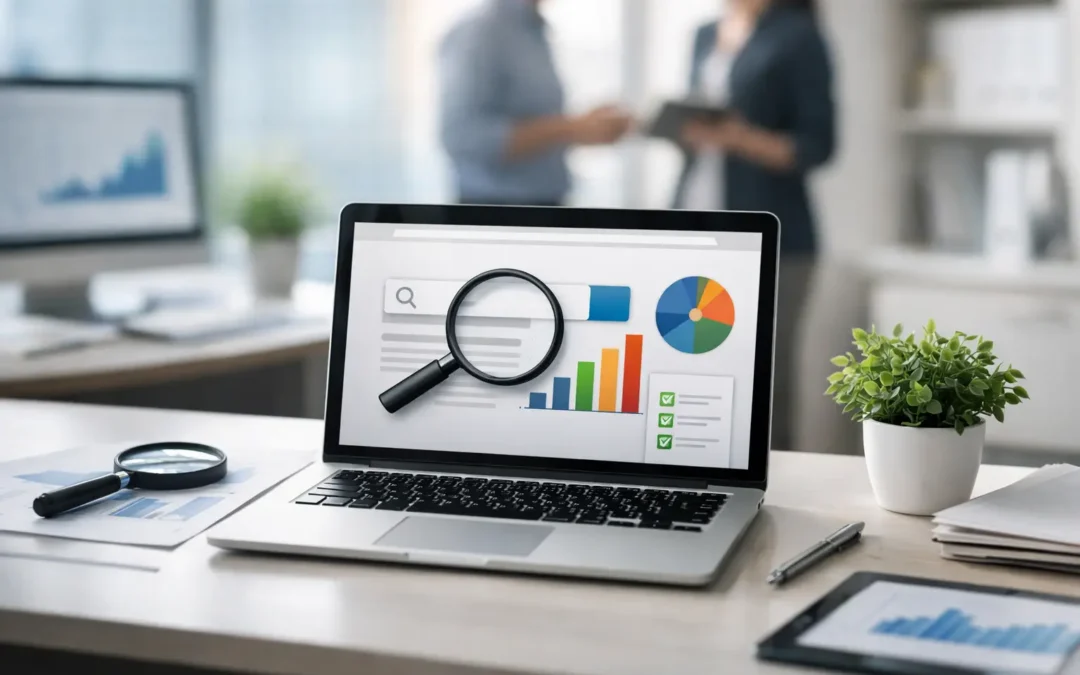
A page can look sharp, load fast, and still fail to rank. That happens when the content says one thing, the code says another, and Google is left guessing what the page is actually about. An on page seo optimization service fixes that disconnect. It turns your website into a clearer, stronger ranking asset – one built to compete for visibility, attract qualified traffic, and convert more of the right visitors.
For businesses in competitive markets, this is not a cosmetic upgrade. It is a revenue play. If your core service pages are buried, if your metadata is weak, if your internal linking is thin, or if your content does not match search intent, you are leaving rankings and leads on the table.
What an on page SEO optimization service actually does
On-page SEO is everything that happens on your website to help search engines understand your pages and help users take action once they land there. That includes title tags, heading structure, content depth, keyword targeting, internal links, URL structure, image optimization, schema, user experience signals, and conversion elements.
A real service goes beyond dropping keywords into copy. It aligns technical signals, content strategy, and page structure so every page has a stronger reason to rank. It also connects SEO with business goals. Ranking for irrelevant traffic is not a win. Ranking for terms that drive calls, form fills, booked consultations, and purchases is what matters.
That is where many businesses lose ground. They either rely on a web designer who is not thinking about search visibility, or they hire an SEO vendor who treats every page the same. Effective on-page work is more precise than that. A home page, a local service page, a product category page, and a blog article all need different optimization strategies.
Why on-page SEO has such a direct impact on growth
If your off-page SEO is the authority builder, on-page SEO is the foundation. Without it, backlinks and ads can only take you so far. Poor page targeting creates mixed signals. Thin content lowers relevance. Weak calls to action waste traffic you already paid to earn.
Strong on-page optimization improves more than rankings. It can raise click-through rates from search results, increase time on page, reduce friction in the buyer journey, and make lead generation more consistent. For local companies and professional service firms, that often means more phone calls, more quote requests, and more qualified inquiries from people already searching for what they offer.
There is also a compounding effect. When your site architecture is organized, your content themes are clear, and your internal links support your key money pages, every new piece of content has a better chance to perform. You are not just optimizing a page. You are strengthening the whole domain.
The core elements of on page SEO optimization service
The first layer is keyword targeting, but not in the outdated sense of stuffing exact phrases into every paragraph. The real job is matching each page to a specific search intent. Some searches are informational. Some are commercial. Some are local and urgent. If the page intent does not line up with the query, rankings usually stall.
The next layer is metadata and page structure. Title tags and meta descriptions influence how your pages appear in search. Headings shape how users and search engines read the content. Clean hierarchy matters because it improves clarity. Google does not reward confusion.
Content quality is where many sites either pull ahead or disappear. Pages need substance, not filler. That means answering the real question behind the search, covering relevant subtopics, building trust, and making the next step obvious. On a service page, that often includes explaining the problem, the solution, the process, and the outcome without wasting space on vague language.
Internal linking is another major lever. If your important pages are isolated or hard to reach, search engines treat them as less important. Strategic internal links pass relevance and authority through your site while helping visitors move naturally toward conversion pages.
Then there is technical alignment. Image alt text, schema markup, crawlability, mobile formatting, page speed, and URL structure all contribute to how well a page performs. Not every issue carries the same weight, and that is where experience matters. Some fixes move the needle quickly. Others are worth doing but should not distract from the changes that affect rankings and lead flow first.
What good service looks like in practice
A strong on page SEO optimization service starts with an audit, but it should not stop there. Audits are easy to sell and easy to ignore. The real value comes from implementation, prioritization, and measurable improvements over time.
That usually means identifying your highest-value pages first. For one business, that might be city-based service pages. For another, it might be a set of commercial landing pages targeting industry-specific terms. If every page is treated as equally important, resources get diluted and results slow down.
A good provider will also look at competitive gaps. If the top-ranking pages in your market are more complete, better structured, more locally relevant, or more persuasive than yours, that gap needs to be closed. SEO is not done in a vacuum. You are competing against pages that are already winning the click.
It should also include conversion thinking. More traffic sounds good, but traffic without action does not pay the bills. Strong on-page optimization supports conversion through better page flow, stronger trust signals, clear offers, and well-placed calls to action. The goal is not just to rank. The goal is to turn rankings into pipeline.
When businesses usually need this service
The need is often obvious once you know what to look for. Your site may have solid branding but no organic traction. You may rank for your business name but not for services that actually generate revenue. You may have plenty of pages indexed, yet very few produce qualified leads.
Sometimes the issue appears after a redesign. New sites often launch with visual improvements but weak SEO foundations. Important headings disappear. URLs change without proper redirects. Content gets shortened for design reasons. Search visibility drops, and the business assumes Google is the problem when the real issue is page-level execution.
Other times, growth simply plateaus. Competitors publish stronger pages, improve local relevance, and tighten their site structure while your content stays static. Search results shift. Leads slow down. An on-page refresh can help reclaim lost ground and create new momentum.
What to expect from results
On-page SEO is powerful, but it is not magic. Results depend on your industry, competition level, domain history, and the current condition of your site. Some businesses see early gains from fixing metadata, content gaps, and internal links on key pages. Others need a longer runway because the market is more aggressive or the site has deeper structural issues.
That said, the upside is significant because on-page changes are fully within your control. You do not need to wait on third-party platforms or hope for random visibility gains. You can improve relevance, strengthen page quality, and create a better path from search to conversion right on your own site.
For small to mid-sized businesses, that control matters. Paid ads stop the moment you stop spending. Organic visibility, when built properly, keeps working. It becomes an asset that supports lead generation month after month.
Choosing the right on page SEO optimization service
Do not choose based on vague promises about page-one rankings. Choose based on process, execution, and business alignment. You want a partner that understands how search performance connects to site structure, messaging, local relevance, and lead generation.
Ask how they prioritize pages. Ask whether they handle implementation or only recommendations. Ask how they measure success beyond rankings. If the answer does not include traffic quality, conversions, and visibility for revenue-driving terms, the strategy is too shallow.
This is especially important for businesses in crowded local and regional markets. The right partner should know how to sharpen page relevance, improve technical clarity, and build a site that competes harder in search. That is the kind of work agencies like WYK Web Solutions focus on – not vanity metrics, but measurable growth tied to real business outcomes.
Your website should not be a digital brochure that sits there and hopes for attention. It should be a search asset that pulls in qualified traffic and turns visibility into leads. If your pages are not doing that now, the fix is not more guesswork. It is smarter on-page execution, applied where it matters most.