
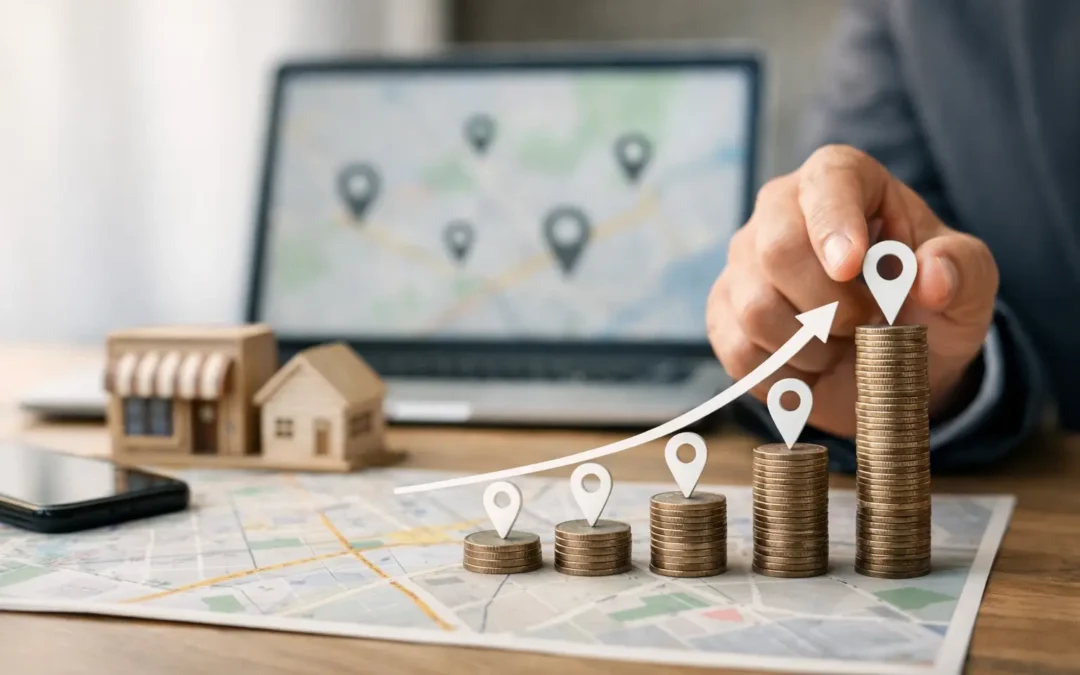
A business can spend months posting on social media, tweaking ads, and refreshing its homepage, yet still lose leads to a competitor down the street with a tighter local search strategy. That is why a strong local visibility growth example matters. It turns vague marketing talk into something business owners can measure – ranking gains, more calls, more form fills, and better lead quality.
For local companies, visibility is not just about appearing online. It is about showing up in the exact places buyers look when they are ready to act. Google Business Profile, local organic results, map listings, service pages, reviews, and location signals all work together. When those pieces are aligned, local search starts producing real commercial momentum.
A local visibility growth example for a competitive service business
Picture a mid-sized home services company in a crowded metro market. The business has a decent reputation offline, but online performance is flat. Its website looks acceptable at first glance, but key local pages are thin, technical SEO issues are slowing it down, and the business profile has inconsistent information across the web. The company ranks inconsistently for high-intent searches and gets buried in map results for many of its most profitable services.
The symptoms are familiar. Traffic is uneven. Leads come in, but not at a level that supports growth. Paid ads are doing too much of the heavy lifting. The owner knows competitors with weaker service quality are taking market share simply because they are easier to find.
This is where local visibility growth begins. Not with random tactics, but with a coordinated plan built around search demand, local authority, and conversion performance.
What changed first
The first move was not publishing ten blog posts or chasing vanity metrics. It was fixing the foundation. The website structure was reorganized so each core service had its own optimized local page. Instead of one general page trying to rank for everything, the business created dedicated pages tied to actual search intent and service areas.
Title tags, headers, internal content, and on-page copy were rewritten to target local phrases with commercial value. That sounds simple, but this is where many campaigns either gain traction or stall out. If a page is vague, generic, or written only for branding, it will struggle to compete against businesses with tighter SEO signals.
At the same time, technical issues were cleaned up. Slow load times, weak mobile usability, duplicate metadata, and crawl inefficiencies were reducing search performance. For a local business, technical SEO is not an optional extra. It affects rankings, user experience, and conversion rate all at once.
Then came the business profile. Categories were refined, service descriptions improved, photos upgraded, and posting activity became more consistent. Review generation was organized into an actual process rather than an occasional ask. That matters because local trust signals influence both click behavior and map visibility.
Why the strategy worked
This local visibility growth example worked because it focused on the signals Google uses to evaluate local relevance and business credibility. It also matched what buyers actually do.
People searching for a local provider want fast answers. They want to know if you serve their area, whether you offer the exact service they need, and whether other customers trust you. If your site and business listings do not answer those questions quickly, you lose clicks before the sales conversation even starts.
The campaign improved three things at once. It increased discoverability in local search, improved trust at the point of search, and made the website better at converting visitors once they arrived. That combination is where the real growth happens.
Many businesses get stuck because they focus on only one layer. Some invest in a nice-looking website with no search strategy behind it. Others chase rankings without improving conversion paths. Some pour money into ads while their local SEO foundation remains weak. Those approaches can produce activity, but they rarely build durable competitive advantage.
The measurable shift in performance
Once the fixes were in place and the local signals started compounding, results became easier to track. Rankings improved for service plus city terms. Map pack visibility expanded. Branded and non-branded local search impressions increased. More importantly, lead volume rose from the pages tied to commercial intent.
The biggest shift was not raw traffic. It was lead quality. Visitors landing on location and service-specific pages were closer to action because the content matched exactly what they searched for. Bounce rates improved, call clicks increased, and forms from organic traffic became more consistent.
This is a key lesson for business owners. More traffic is not always the win. Better traffic is. If local SEO brings in people outside your service area or users searching for low-value information, growth will feel weaker than the analytics suggest. Strong local visibility should bring in prospects with purchase intent.
In many cases, paid media also becomes more efficient after local SEO improves. Better landing pages, stronger trust signals, and clearer local relevance can lift ad conversion rates too. That is one reason integrated strategy outperforms isolated tactics.
The trade-offs most businesses miss
A good local visibility growth example should also be honest about trade-offs. Local SEO is powerful, but it is not instant. Businesses in competitive industries should expect a phased climb, especially if stronger competitors already own map visibility and local organic rankings.
There is also a content trade-off. Hyper-local pages can help rankings, but low-quality duplicate location pages can do the opposite. The goal is not to manufacture dozens of weak pages. The goal is to create pages with distinct local value, clear service relevance, and real conversion intent.
Review growth has a similar nuance. More reviews usually help, but only if the process is consistent and authentic. Sudden spikes, poor response handling, or generic review language can weaken trust instead of building it.
And yes, sometimes paid search should run alongside local SEO. If a business needs leads quickly, waiting on organic momentum alone may not be the smartest commercial move. The best approach depends on timeline, competition, budget, and current digital maturity.
What this means for local companies now
If your business relies on nearby customers, local visibility is not a side project. It is revenue infrastructure. The companies gaining ground are not always the biggest. They are the ones with cleaner search signals, stronger local authority, and websites built to convert.
That is why an agency like WYK Web Solutions pushes beyond surface-level marketing. The real advantage comes from aligning site structure, local SEO, paid search, content, and reporting into one growth engine. When all of those parts support each other, visibility stops being random and starts becoming measurable.
For small to mid-sized businesses, that matters even more. You may not have the budget to waste on disconnected tactics. Every page, every profile update, every review request, and every reporting insight should move toward a clear business outcome – more qualified leads and stronger market share.
How to spot your own local visibility gap
If you want to know whether your business has a local visibility problem, look beyond simple traffic charts. Ask harder questions. Are your highest-value services ranking in the areas you actually serve? Do your local landing pages convert? Are competitors with weaker offers showing up more often in maps? Are your reviews helping close the click or just sitting there? Is your website built like a sales asset or an online brochure?
Those questions reveal where growth is blocked.
The strongest local campaigns usually start with clarity. Know which services drive profit. Know which cities or neighborhoods matter most. Know where your rankings stand now, where your map presence is weak, and where technical or content issues are dragging performance down. From there, the path gets sharper.
Local search rewards relevance, authority, and consistency. It also rewards businesses willing to build the right foundation instead of chasing shortcuts. If your current online presence is underperforming, that is not a branding issue alone. It is a market share issue.
The upside is real. A well-executed local strategy can turn your website into a lead-generating asset, strengthen every other marketing channel, and put your business in front of buyers at the moment they are ready to choose. That is the kind of growth worth competing for.