
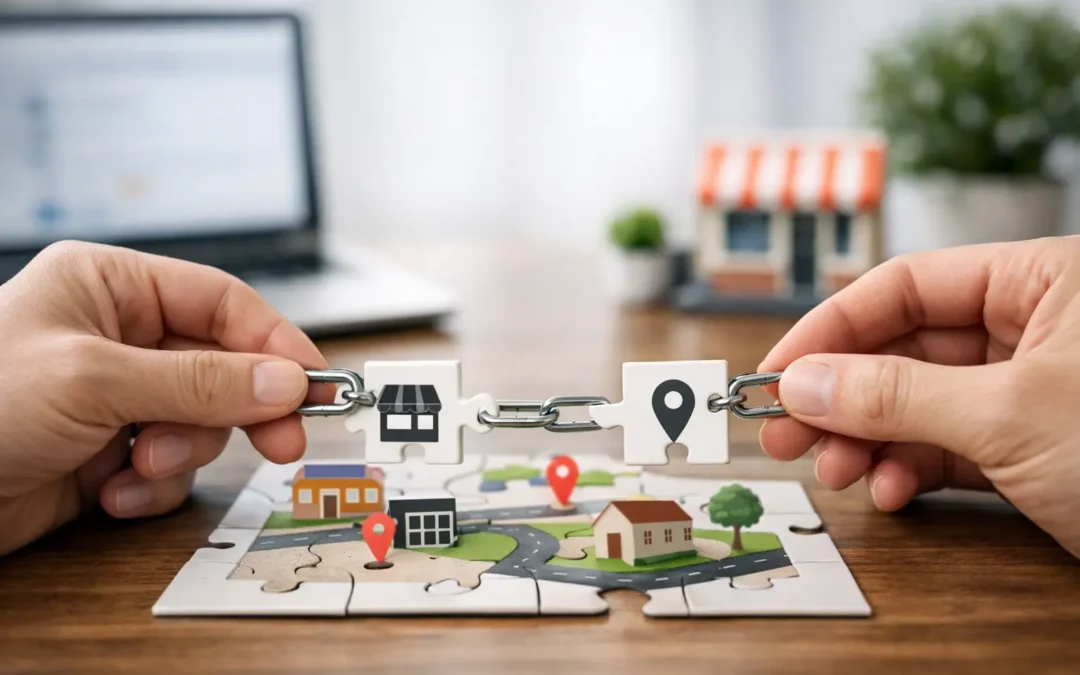
Most local companies do not have a visibility problem because they lack services. They have a visibility problem because Google has more trust in their competitors. That is where link building for local businesses stops being a nice-to-have and starts acting like a growth lever.
If your business depends on calls, form submissions, booked appointments, or foot traffic, links are not just an SEO metric. They are trust signals. They tell search engines your company is relevant in a real market, connected to real organizations, and worth showing to real customers. In competitive local search, that trust can be the difference between showing up in the map pack or getting buried under better-known brands.
Why link building for local businesses matters
Local SEO is not only about your Google Business Profile, reviews, and location pages. Those pieces matter, but they do not operate in a vacuum. When Google evaluates who deserves visibility, it looks at authority as well as proximity and relevance. Backlinks help build that authority.
For a local business, the strongest links are rarely random mentions from broad, unrelated websites. They come from organizations, publications, associations, suppliers, partners, event pages, local chambers, sponsorships, industry directories, and media sources tied to your geography or service category. Those links support rankings because they make your business look established in the exact market you want to dominate.
There is also a business case beyond rankings. A good local link can send referral traffic, reinforce credibility, and create another path for customers to discover your brand. If a local newspaper, respected association, or community organization mentions your business, that placement has value even before SEO enters the conversation.
What good local links actually look like
Too many business owners hear “link building” and think of spammy outreach, paid placements, or shady directory submissions. That approach burns budget and creates risk. Strong local link building is more strategic.
A good local link usually checks at least two boxes. First, it is relevant to your market, your location, or your industry. Second, it comes from a site with real audiences and real credibility. A link from a regional business association may carry more value for a Calgary law firm or home services company than a generic blog link from a site with no local context.
Context matters too. A mention inside a useful article, member profile, vendor page, or community feature is often stronger than a buried listing on a low-quality page packed with outbound links. The goal is not to collect the highest number of backlinks. The goal is to build the right authority signals that support local search performance.
Relevance beats volume
This is where many campaigns go off track. Some agencies sell volume because it sounds impressive. Fifty weak links can look good in a report and still do almost nothing for rankings. Five strong local or industry-relevant links can move the needle more.
That does not mean every link has to come from your city. If you serve a broader region or work in a specialized field, industry authority also matters. A CPA firm, dental practice, roofing company, or personal injury lawyer will benefit from links tied to both location and vertical expertise. The mix depends on your market, your competition, and how customers search.
The local link building tactics that still work
The best tactics are usually the least flashy. They work because they are grounded in real business relationships and real market presence.
Local citations and directory management are the baseline, not the finish line. You want accurate listings on credible platforms, but this alone will not separate you from aggressive competitors. After that, local associations, chamber memberships, supplier pages, and professional organizations become some of the easiest wins. These links are often highly relevant and easier to secure because they reflect genuine business affiliation.
Community involvement can be powerful if it is authentic. Sponsoring a local event, supporting a nonprofit, offering a scholarship, partnering on a fundraiser, or participating in an industry panel can earn meaningful mentions. The key is intent. If you are only doing it for the link, the campaign tends to feel forced. If the partnership fits your brand and market, the SEO value becomes an added return.
Local PR is another underused advantage. New hires, expansions, relocations, awards, unique projects, local data, and community initiatives can all become newsworthy with the right angle. Businesses often assume press mentions are reserved for large companies. They are not. Local media and niche publications need relevant stories, and a strong pitch can turn normal business momentum into valuable authority.
Resource pages and local partnerships also deserve attention. Think about the businesses and organizations you already work with. Vendors, trade associations, commercial landlords, business groups, complementary service providers, and local schools may all have opportunities for featured partners or recommended resources. These are often easier to earn than cold outreach links because there is an existing relationship.
What to avoid when building links
The pressure to rank faster leads many businesses into bad decisions. Buying cheap backlinks, submitting to every directory available, trading links with unrelated sites, or outsourcing to vendors that promise hundreds of links per month can do more harm than good.
Low-quality link building creates three problems. First, it wastes budget that could have gone into assets that actually improve visibility. Second, it muddies your backlink profile with irrelevant or manipulative placements. Third, it distracts from the work that compounds over time, like content development, technical SEO, and local authority building.
There is also a trade-off between speed and durability. Quick-win tactics can produce short-term movement in weak markets, but they rarely hold up in competitive ones. If your business operates in legal, healthcare, home services, finance, or any crowded metro area, your link strategy needs to be built for staying power.
How to make link building support revenue, not just rankings
This is the part many campaigns miss. Link building should not run as a disconnected SEO task. It should support your broader growth engine.
That means your website has to be ready to convert the visibility those links help create. If you earn stronger rankings but send traffic to weak service pages, thin location content, or a site that does not inspire trust, you are leaving revenue on the table. Authority and conversion have to work together.
Your content strategy matters too. It is much easier to attract and earn links when your site has useful assets worth referencing. That could be a local market guide, a location-specific service resource, original data, a practical checklist, or a strong community-focused article. Businesses that invest in content with local intent give outreach and PR efforts something concrete to point to.
Tracking also needs to improve. The right question is not “How many links did we build?” It is “Did rankings improve for high-intent terms, and did that produce calls, leads, or booked jobs?” That is the standard serious businesses should hold their SEO partner to.
A smarter approach to link building for local businesses
The strongest campaigns start with competitive analysis. If the businesses outranking you have links from chambers, local media, associations, sponsorships, and niche directories you do not have, the path forward becomes clearer. You do not need a mystery tactic. You need to close authority gaps.
Then comes prioritization. Not every link opportunity deserves the same effort. Start with the links that align with your market position, your industry, and your customer geography. Build the assets and relationships that can earn those mentions. After that, layer in outreach, PR, and content promotion.
For many companies, this is where an experienced growth partner makes the biggest difference. Link building is rarely just outreach. It touches technical SEO, local optimization, content strategy, conversion performance, and reporting. When those pieces operate together, rankings improve with more consistency and leads become easier to attribute. That is the difference between random SEO activity and a system built to take market share. WYK Web Solutions approaches local SEO the same way serious businesses approach growth – with strategy, execution, and measurable performance.
If you want stronger local rankings, better trust signals, and a real shot at outranking established competitors, link building deserves a place in your growth plan. Not as a shortcut, and not as a vanity metric, but as part of the authority your business needs to win where customers are already searching.